Explore DiPLab, an interactive multimodal experience that engages young people in learning about antimicrobial resistance through digital simulations of antibiogram testing, enhancing understanding of antibiotic use and resistance challenges.
Abstract
DiPLab is an interactive multimodal experience designed to engage young people in learning about antimicrobial resistance (AMR). By simulating antibiogram testing digitally, DiPLab allows participants to explore antibiotic susceptibility assays outside traditional microbiology facilities, enhancing their understanding of antibiotic utilization and the challenges posed by AMR.
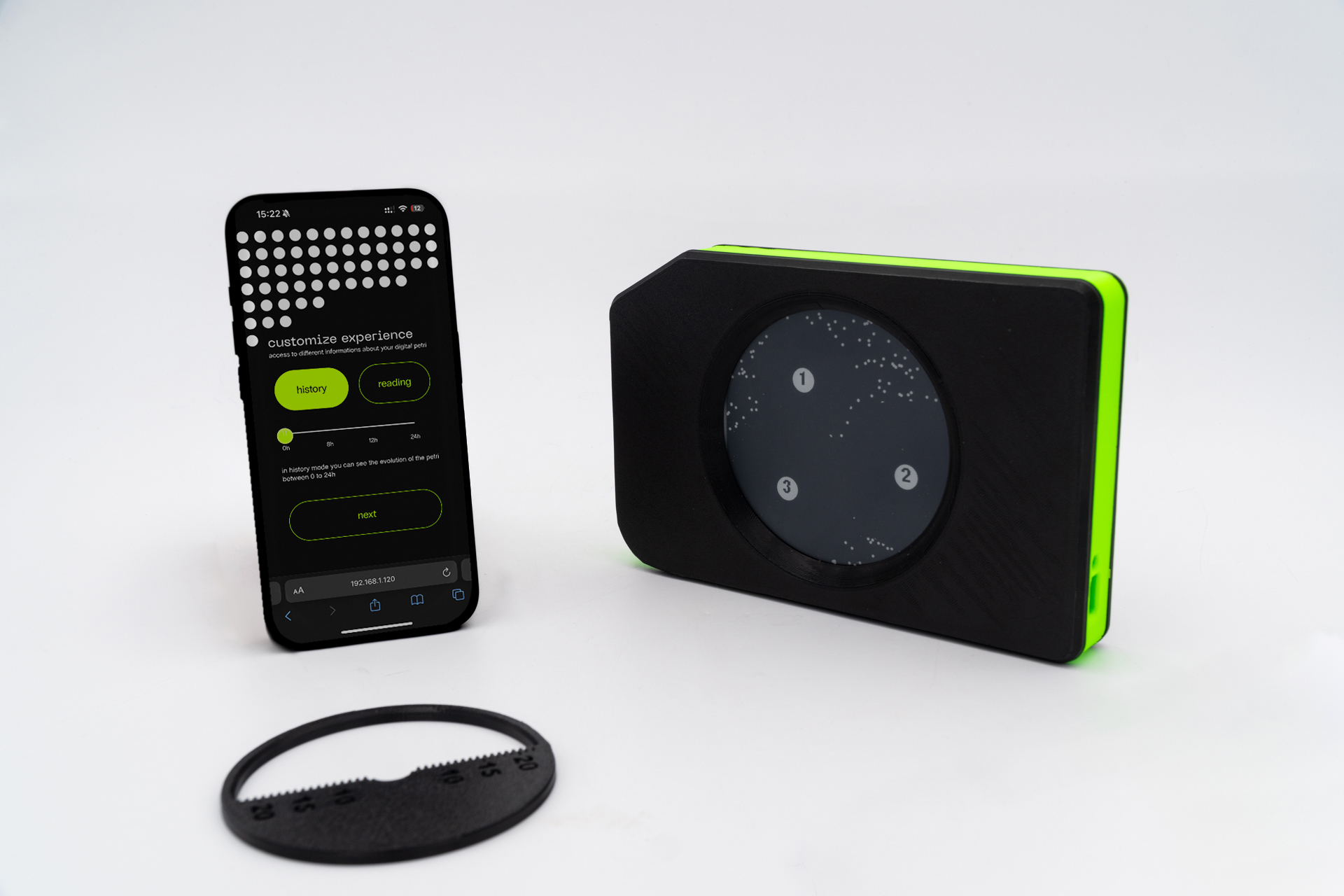 The Digital Petri Laboratory in the complete set with a phone, the personalised ruler and the patient dossier - Image courtesy of SPEARHEAD MAKEAWARE! under CC BY SA 4.0
Concept
The experience begins with an introduction by a microbiologist or tutor on the topic of AMR, followed by a brief explanation of how to use DiPLab. Participants, divided into groups based on device color, receive a specific bacteria reflecting a patient’s medical record detailed in a provided dossier. Users input their names and class codes, select the bacteria as a base for the digital Petri dish, and spread it by tilting the device. They then choose three antibiotics to apply, placing each tab by interacting with the device display. The digital Petri dish is now complete, and the smartphone interface offers two visualization modes: history and reading. The history tab allows visualization of the Petri dish at 0h, 8h, 12h, and 24h, while the reading mode enables selection of a single antibiotic tab to examine the inhibition area. Participants record the results in the patient dossier, iterating the process to determine the most effective antibiotic for the simulated patient.
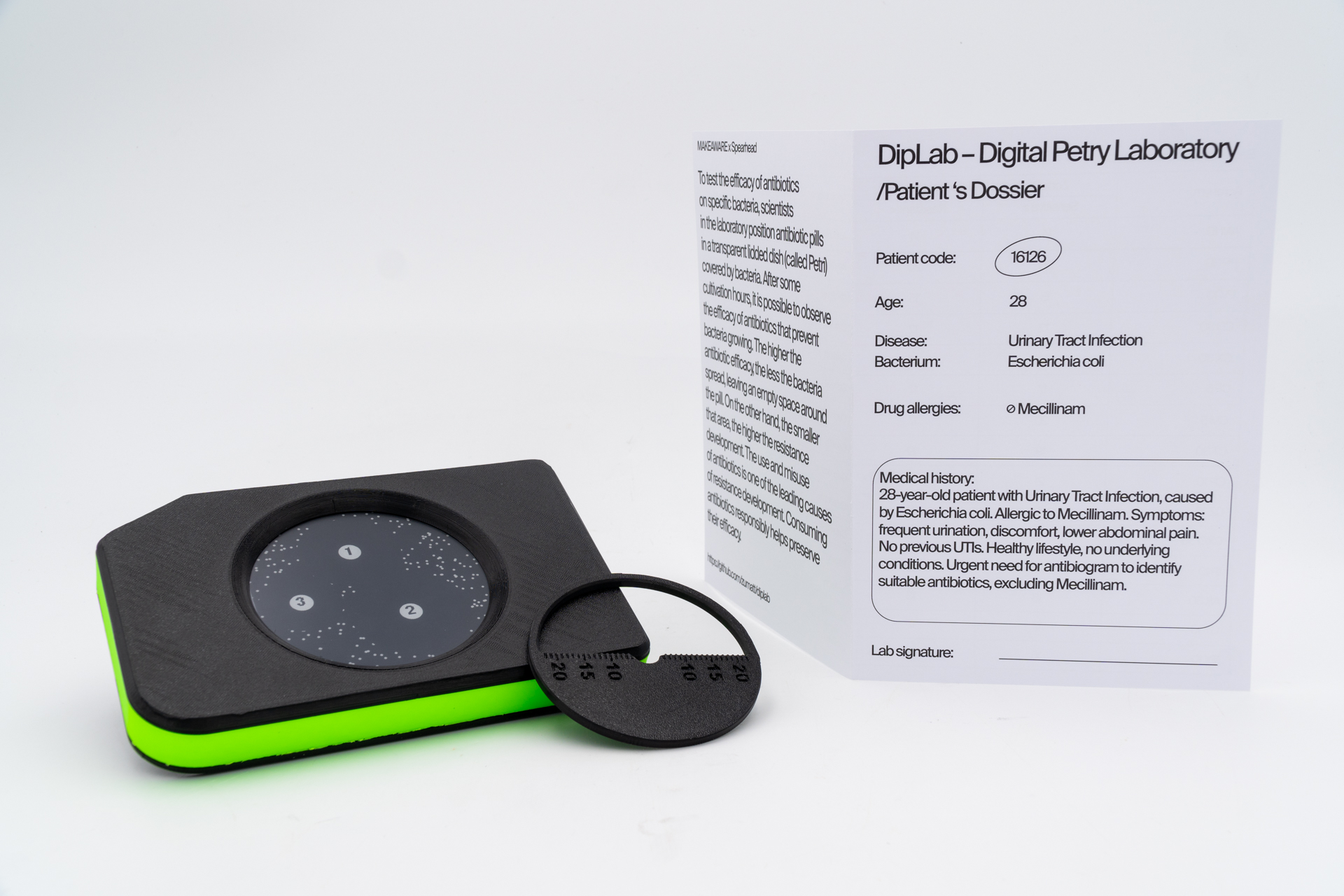 The Digital Petri Laboratory device and the patient dossier - Image courtesy of SPEARHEAD MAKEAWARE! under CC BY SA 4.0
Process Development
DiPLab originated as a Master’s thesis project during the Master of Arts in Interaction Design at SUPSI. The research aimed to find effective ways to disseminate information about AMR to high school students, presenting this complex topic accessibly. The development involved quantitative studies of existing projects and microbiology, qualitative insights from experts working with teenagers, and co-design workshops with Swiss design university students. Multiple prototype iterations were tested and refined, leading to the final concept presented in February 2023. Subsequent user testing ensured optimal refinement before launching workshops in collaboration with MAKEAWARE!
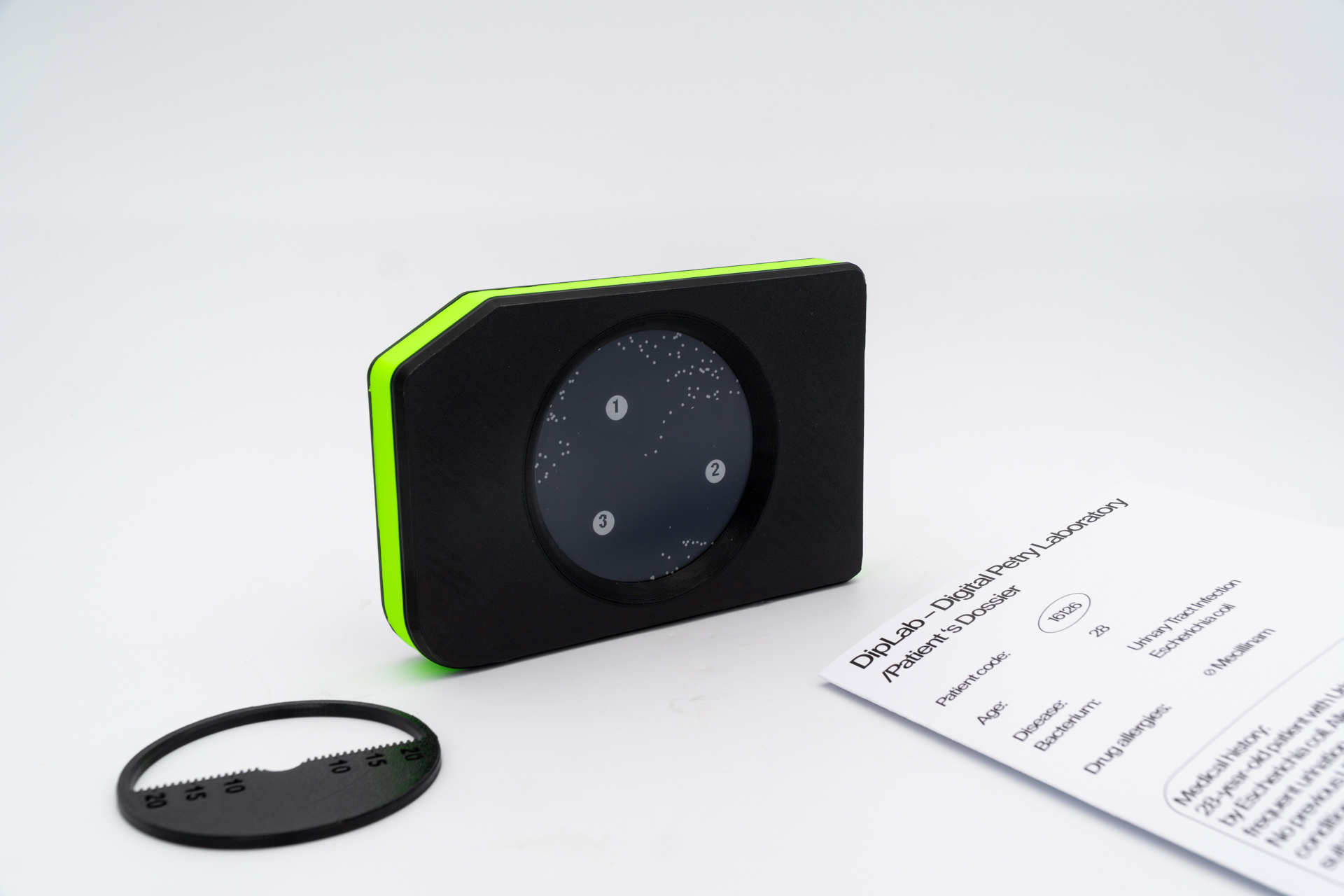 The Digital Petri Laboratory device and the patient dossier - Image courtesy of SPEARHEAD MAKEAWARE! under CC BY SA 4.0
Note
The project was developed during as my thesis of the Master of Arts in Interaction Design at SUPSI also thanks to my supervisors Serena Cangiano and Marco Lurati.
How to cite this page:
Subet, Matteo (2023). Digital Petri Laboratory. Retrieved on 18 December 2025 from zumat.ch/projects/diplab.html