Explore the interactive installations created for "Malta. Storia e scienza in frammenti," an exhibition showcasing medieval craftsmanship and mortar analysis at Müstair & Castel Grande. Learn about the project's development and its focus on cultural heritage.
Abstract
This article details my involvement in the development of interactive installations for “Malta. Storia e scienza in frammenti” (“Mortar. History and Science in Fragments”), an exhibition exploring medieval craftsmanship and its legacy. My contribution focused on creating five distinct interactive stations, designed to allow visitors to experience the voices and perspectives of key figures through audio-visual elements.
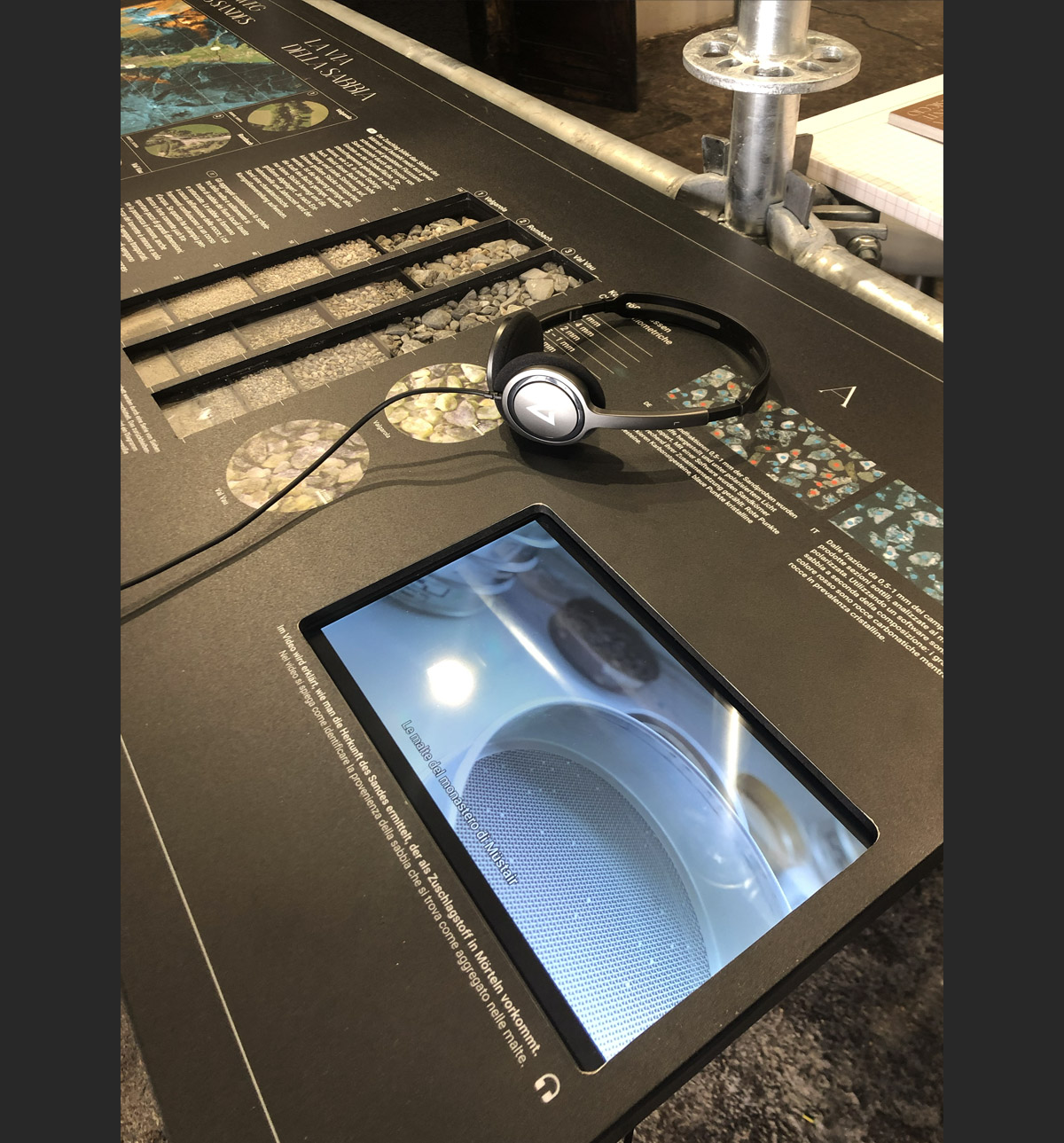 An interactive audio-visual part of the installation at CastelGrande - Image courtesy of studioits.ch
Concept
The exhibition “Malta. Storia e scienza in frammenti” is a collaborative project between the UNESCO Chair at the Università della Svizzera italiana (USI), the Institute for Materials and Construction, the Institute of Design, and Conservation and Restoration Sector of the Scuola universitaria professionale della Svizzera italiana (SUPSI), and the Fondazione Pro Kloster St. Johann a Müstair. It offered visitors a journey back over a millennium to examine how medieval artisans, utilising limited resources, constructed enduring works of art. A central focus was the Convent of St John at Müstair, Canton Grigioni, a UNESCO World Heritage site since 1983.
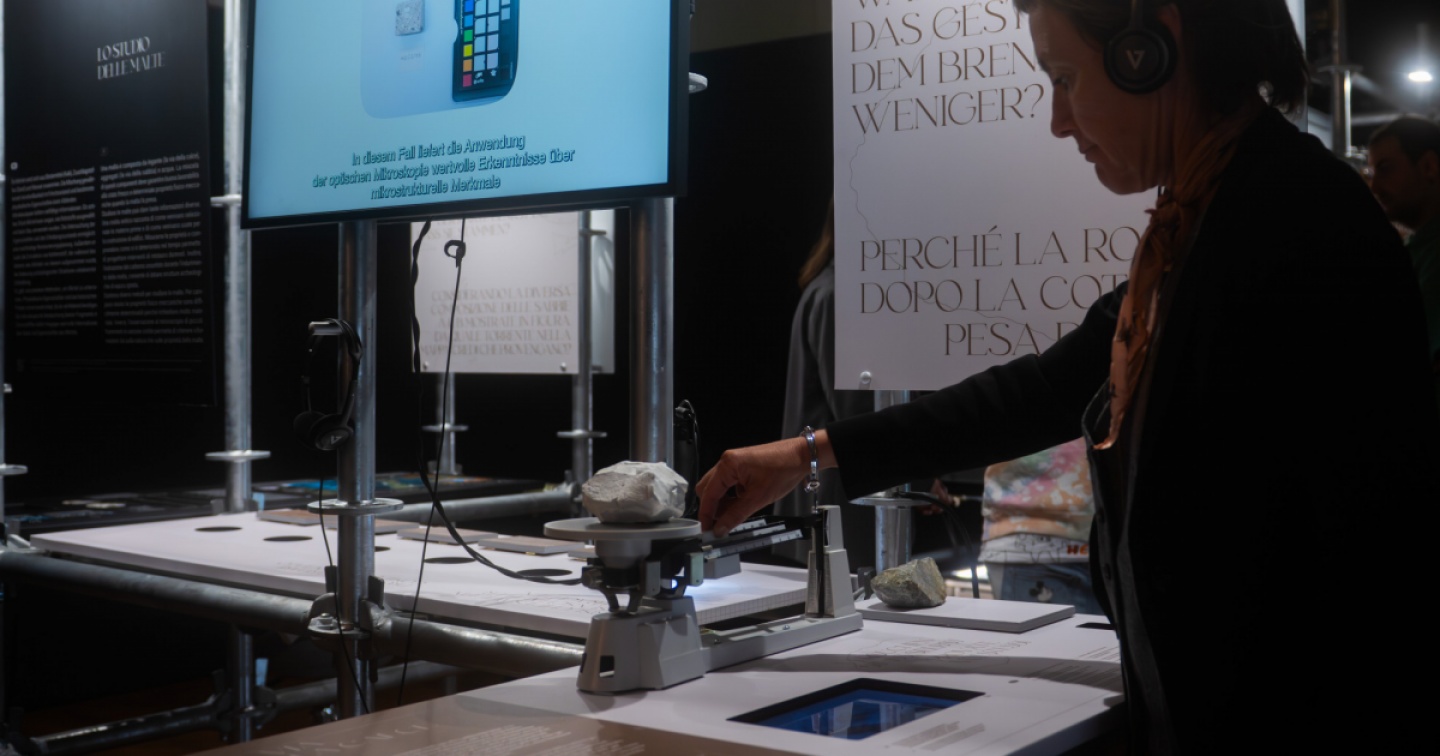 The interaction with the installation at CastelGrande - Image courtesy of laregione.ch
The exhibition aimed to raise awareness of the value of cultural heritage and introduce audiences unfamiliar with specialist disciplines such as archaeology, geology, and materials science to these fields. It achieved this through a combination of narrative storytelling, interactive elements, and multimedia installations, supported by funding from the Swiss National Science Foundation (FNS).
Process Development
My role within the project involved developing five interactive stations for the exhibition. These stations were designed to provide visitors with an immersive experience, allowing them to hear and see the voices of those involved in the creation and study of the Convent of St John. The interactive elements aimed to engage audiences directly with the research process, illuminating the scientific hypotheses surrounding the history, geology, and construction techniques employed by medieval artisans.
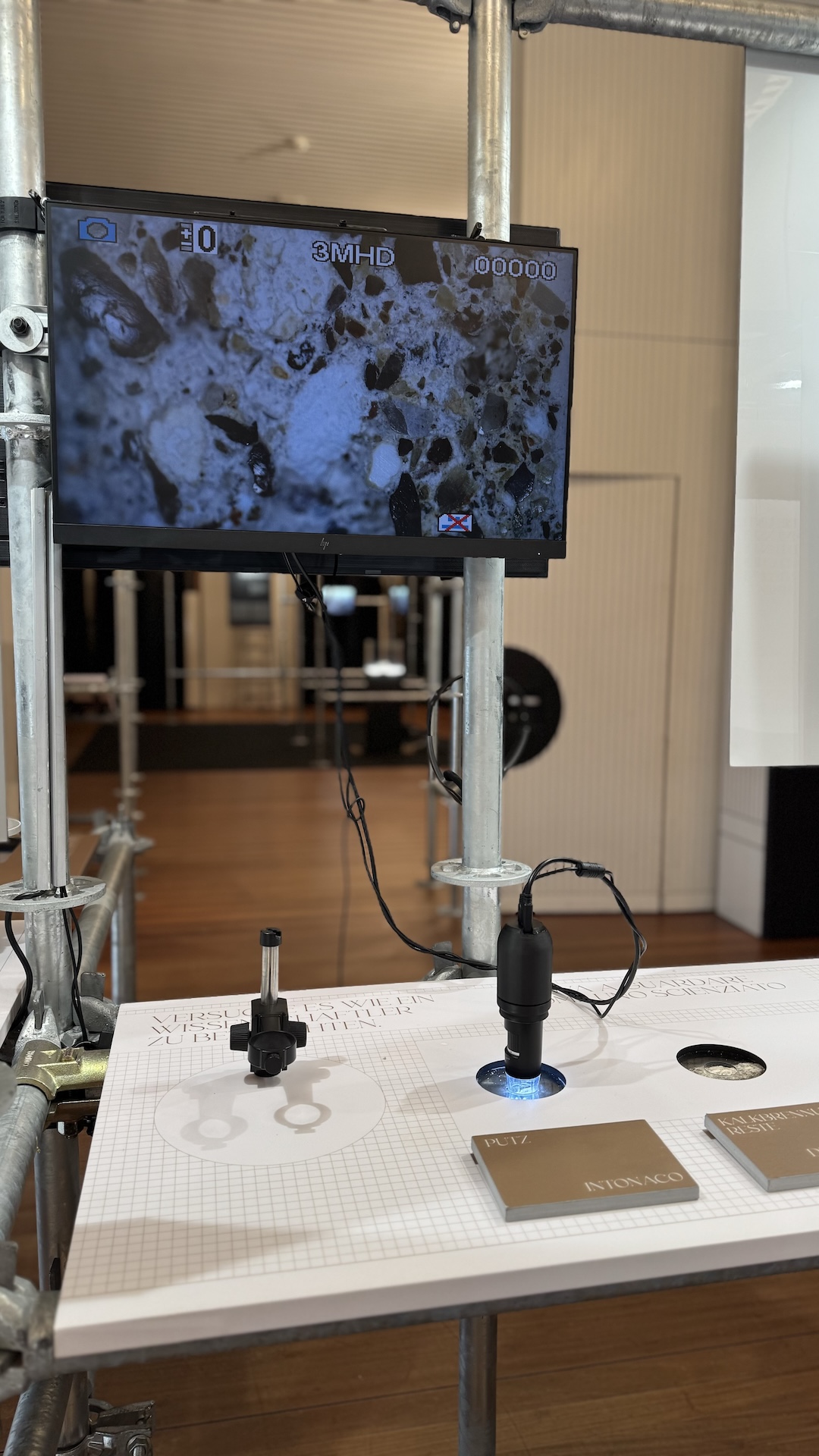 The detail of the electronic microscope at CastelGrande - CC BY SA 4.0
Over five decades of excavation at Müstair have yielded thousands of mortar fragments, providing invaluable insights extending beyond the Convent itself. These findings shed light on the skills and artistry of craftspeople across Switzerland and Europe. The exhibition traced the journey of a single fragment of mortar, from river sand to its incorporation into magnificent works of art.
Note
The exhibition concluded with its run at Castel Grande in Bellinzona, having previously been displayed at the Convent of Müstair from June 2023 to April 2024. This collaborative effort between USI, SUPSI, and Fondazione Pro Kloster St. Johann a Müstair underscored the importance of interdisciplinary cooperation in effectively communicating scientific research and cultural heritage. The exhibition also benefited from collaboration with the Ticino Archaeological Association (AAT), which provided opportunities for visitors to engage directly with researchers through talks, guided tours, and workshops designed for secondary school students.
How to cite this page:
Subet, Matteo (2023). Müstair Exhibition Interactive Installation. Retrieved on 18 December 2025 from zumat.ch/projects/mustair_exhibition_interactive_installation.html